
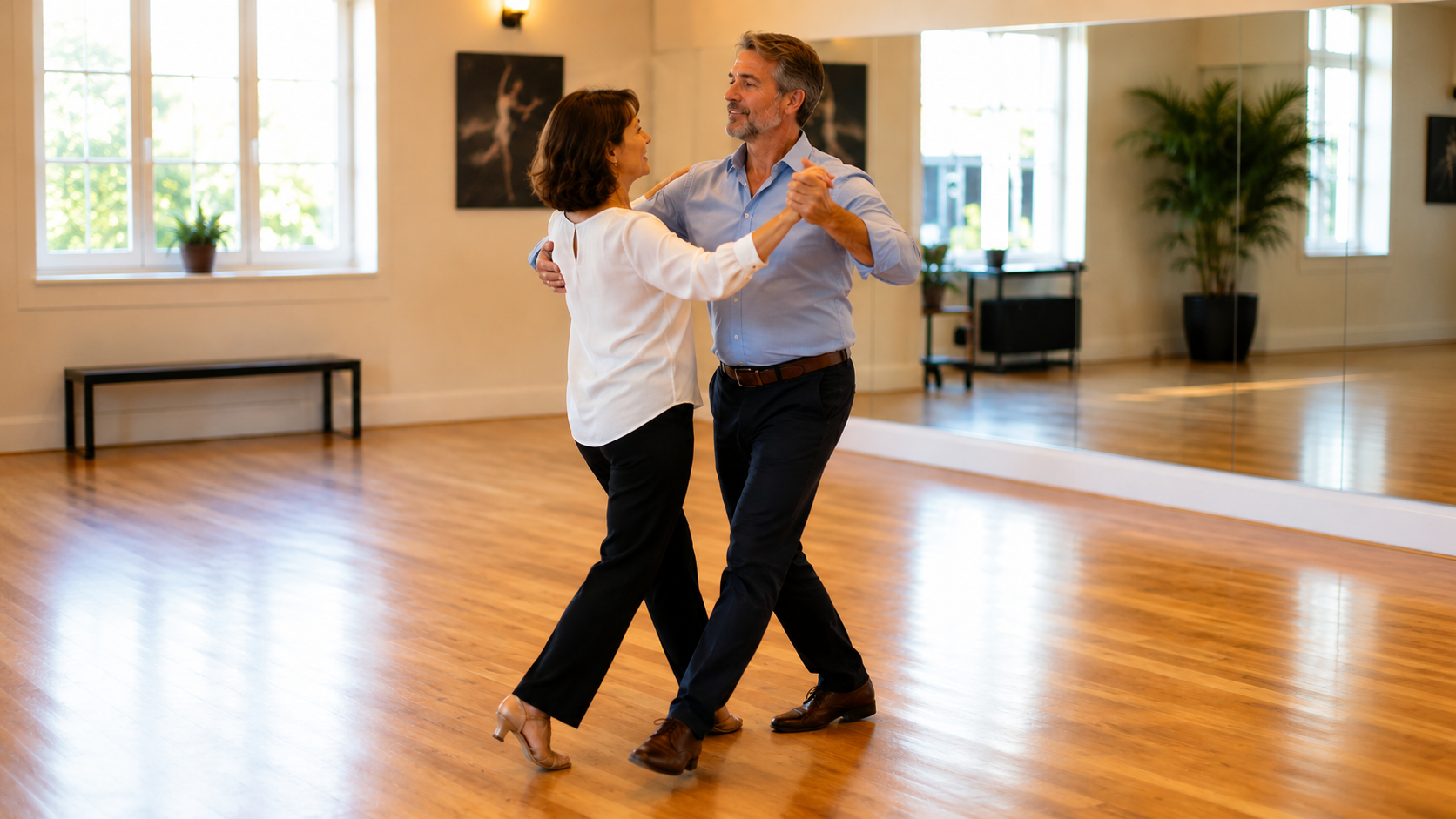
Foxtrot is widely considered the easiest ballroom dance to learn first because it uses a straightforward walking pattern, adapts to many music tempos, and appears at most social events. The steps feel natural, the timing is forgiving, and you can apply what you learn almost immediately at weddings, galas, and parties.
Most people who’ve put off dance lessons assume they’ll need months of practice before anything clicks. They picture complicated footwork, strict timing, and a learning curve that feels steeper than it’s worth. Then they try foxtrot, and the first lesson makes more sense than they expected.
Why Foxtrot Works for Adult Beginners
Foxtrot relies on smooth, walking-style steps that mirror how you already move, making it accessible for adults who haven’t danced before. There’s no jumping, no sharp hip action, and no need to memorize intricate sequences right away. You move around the floor in a pattern that feels less like choreography and more like an elegant walk with a partner.
The music is equally forgiving. Foxtrot works with a wide range of tempos and song styles, from Frank Sinatra to contemporary pop ballads. That flexibility means you’re not hunting for the one “right” song to practice with—you can dance to most of what’s playing at a wedding or event.
Because the steps are grounded and steady, you spend less time worrying about balance and more time learning how to lead or follow. That shift happens faster than most beginners expect, and it’s the reason foxtrot builds confidence so quickly.
How Foxtrot Compares to Other Starter Dances
Waltz and rumba are common alternatives, but foxtrot’s even rhythm and natural movement make it easier to pick up first. Waltz uses a three-count pattern that can feel less intuitive if you’re used to counting in fours, and the rise-and-fall motion takes coordination that beginners don’t always have in the first few lessons.
Rumba is slower and more grounded, which sounds easier on paper. In practice, the hip motion and subtle weight shifts require body awareness that takes time to develop. Foxtrot skips that complexity entirely.
Swing and cha cha both have upbeat energy that appeals to a lot of people, but the speed and syncopation can overwhelm someone who’s still getting comfortable with the idea of moving in time with music. Foxtrot gives you space to think, adjust, and enjoy the process instead of just trying to keep up.
Instructors who’ve worked with thousands of adult beginners consistently see the same pattern: students who start with simpler movement patterns build confidence faster and retain new skills more effectively. Foxtrot delivers exactly that foundation.
What Makes a Dance “Easy” in the First Place
A dance is easiest to learn when the footwork feels natural, the timing is clear, and the steps translate to real-world situations you’ll encounter. Foxtrot checks all three. The movement mimics walking, the rhythm stays steady, and you’ll use it at nearly every formal event you attend.
Ease also depends on what you’re hoping to accomplish. If your goal is to not look lost at your daughter’s wedding, foxtrot will get you there faster than any other dance. If you want something with more flair or personality, you might still start with foxtrot to build the fundamentals, then branch out once you’re comfortable.
The floor patterns in foxtrot are progressive, meaning you travel around the room rather than staying in one spot. That gives you a sense of momentum and makes the dance feel more complete, even when you’re only working with a handful of steps.
How Long It Takes to Feel Comfortable
Most beginners feel confident enough to dance foxtrot at a social event after three to five lessons. That doesn’t mean you’ve mastered it—it means you can move through a song without feeling lost, lead or follow with some reliability, and look like you belong on the floor.
The timeline depends on how often you practice and whether you’re learning solo or with a partner. Private lessons move faster because the instruction is tailored entirely to you. Group classes give you more variety in partners and more exposure to how other people interpret the same steps, which can be just as valuable.
People who practice between lessons—even just walking through the basic pattern at home—tend to pick things up noticeably faster. The muscle memory develops quicker, and the timing starts to feel automatic instead of something you have to count out loud.
Should You Start with Private or Group Lessons?
Private lessons work well if you want faster progress or feel self-conscious about learning in front of others. Group classes are better if you want built-in practice partners and a more social experience. Neither option is inherently easier—they just serve different needs.
If you’re preparing for a specific event and have a short timeline, private lessons let you focus exactly on what you need without spending time on material that doesn’t apply. You also get immediate feedback and can move at your own pace without waiting for the rest of the class to catch up.
Group classes introduce you to more people, which matters if part of your reason for trying dance is to meet others or build a social routine. Rotating partners also teaches you to adapt, because no two people lead or follow the same way. That adaptability makes you a better dancer faster than working with just one person.
Many people start with a private lesson or two to get the basics down, then join a group class once they feel ready to practice with others. That combination tends to work well for adults who want structure but also value the energy of a room full of people learning the same thing. You can explore different lesson formats to see what fits your schedule and goals.
What to Expect in Your First Foxtrot Lesson
Your first lesson will focus on the basic step pattern, posture, and how to move with a partner—not perfection. Instructors know you’re new, and the goal is to make the movement feel manageable, not to turn you into a performer by the end of the hour.
You’ll start with footwork. The instructor will walk you through the basic box or progressive pattern, without music at first, so you can focus on where your feet go and how your weight shifts. Once that feels steady, you’ll add the timing and then the music.
Frame and posture come next—how to hold your arms, where to look, how to stay connected with your partner without feeling stiff. It’s less formal than it sounds, and most people adjust to it faster than they expect. The whole lesson is built around getting you comfortable enough to try it again, not overwhelming you with details you’re not ready for yet.
If you’re in northern New Jersey, Arthur Murray has locations in Chatham, Denville, Morristown, and Ridgewood. The instructors there work with adult beginners regularly, and the first lesson is designed to show you what’s possible before you’ve talked yourself out of it.
Leave a Reply