
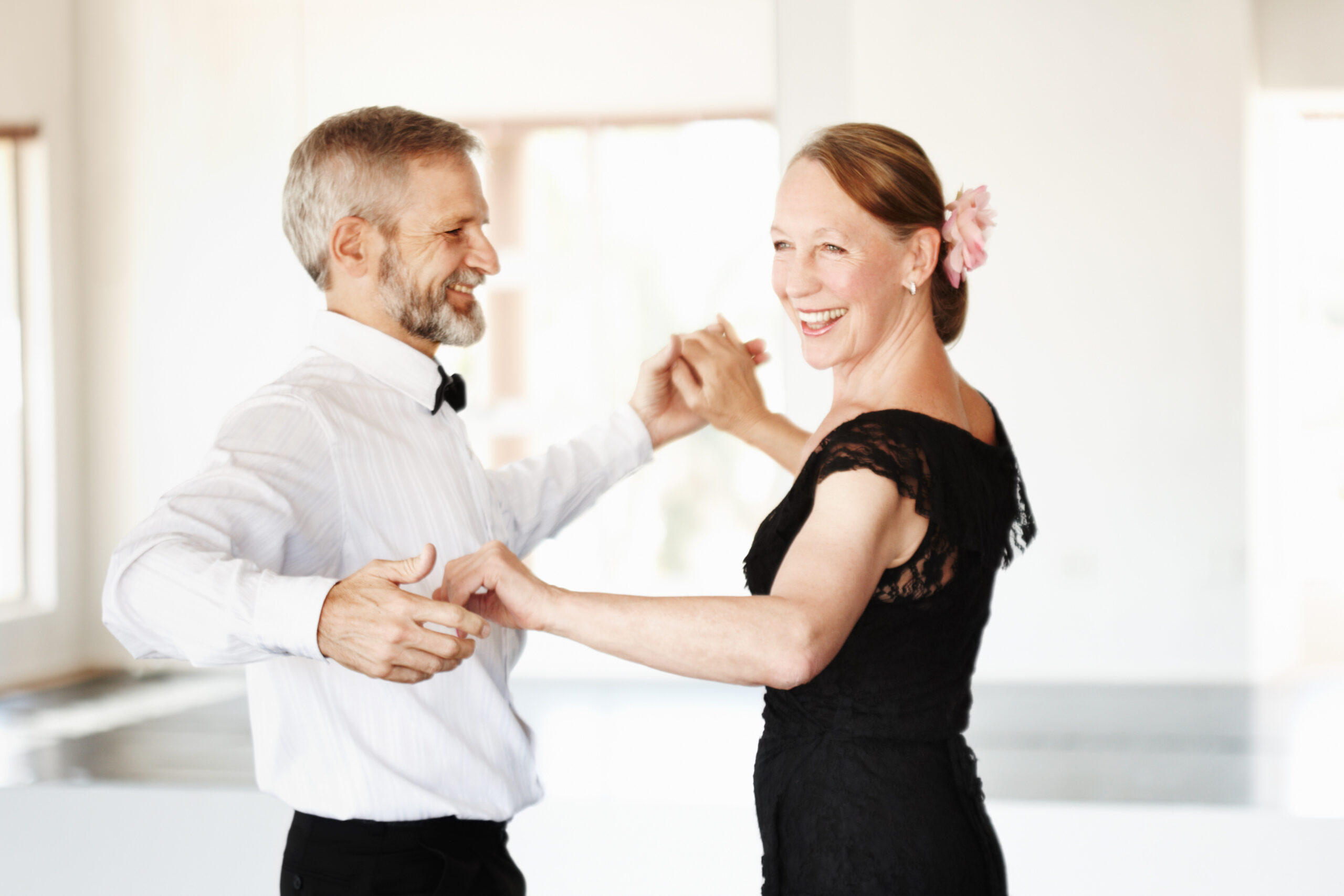
Yes, you can. Rhythm isn’t a fixed trait you’re born with or without—it’s a skill that develops with repetition and guidance. Most adults who describe themselves as having no rhythm simply haven’t had structured practice listening to music while moving. Ballroom dance lessons break rhythm down into teachable steps, and what feels impossible at first becomes manageable within a few weeks.
Most people who avoid dance lessons do so because they’ve decided they’re bad at it before they’ve tried. They’ve stood at the edge of a wedding dance floor, felt off-beat, and turned that moment into a permanent verdict about their ability. But rhythm works differently than that assumption suggests.
Rhythm isn’t something you either have or don’t have
Rhythm is the ability to perceive a beat and coordinate your movement with it. Some people pick it up quickly. Others take longer. But nearly everyone can learn it with the right kind of practice, because rhythm is less about natural talent and more about repetition and attention.
When an instructor works with a beginner who struggles with timing, they’re not trying to unlock some hidden gift. They’re teaching the person how to listen differently—how to feel the downbeat, how to count measures, how to let the music cue the movement instead of trying to think their way through it. That process takes time, but it’s a process, not a mystery.
The adults who make the most progress aren’t the ones who arrive with a head start. They’re the ones who stay with it long enough for their body to stop fighting the beat.
What actually makes someone feel uncoordinated on the dance floor
Most adults who think they have no rhythm are dealing with something more specific: they’re trying to think and move at the same time, and the thinking is getting in the way. They hear the music, they know they’re supposed to move, and then they freeze trying to figure out what comes next.
That’s not a rhythm problem. That’s a coordination problem, and it’s common in any activity where your brain is processing instructions while your body is trying to execute them. The feeling of being behind the beat or stepping on the wrong foot usually means you’re still translating the steps in your head instead of letting your body respond to the music.
Dance lessons for beginners are built around this. Instructors teach the same basic step over and over with the same piece of music until your body stops waiting for permission from your brain. Once that happens, rhythm starts to show up on its own.
How ballroom lessons teach rhythm to adults who think they don’t have it
Ballroom instructors don’t assume you can hear the beat or count measures. They start by teaching you how to do both, out loud, while standing still. You listen to a song and count “one, two, three, four” until you can feel where the downbeat lands. Then you add a weight shift. Then a step. Then a full pattern.
The structure removes the guesswork. You’re not trying to improvise your way into rhythm—you’re learning to match a specific movement to a specific count in a specific piece of music. As reported by the National Institute on Aging, this kind of structured physical and cognitive practice has measurable benefits for adults, particularly in coordination and executive function.
What changes over the first few lessons isn’t your ability. It’s your confidence in recognizing the beat and trusting that your feet will land where they’re supposed to. The rhythm was always in the music. You’re just learning how to meet it.
Group classes add another layer. You’re surrounded by other beginners working on the same timing, and you can hear when someone else gets it right. You start to notice what the beat feels like when you’re on it versus when you’re rushing or dragging. That external feedback helps more than most people expect.
The difference between learning a pattern and learning to dance socially
Learning the steps to a foxtrot in a lesson is one thing. Dancing a foxtrot at a wedding with a live band and a crowded floor is another. The second situation requires you to adapt what you’ve practiced to music you haven’t heard before, and that’s where rhythm becomes less about counting and more about feel.
Most adults don’t realize that transition is part of the process. They assume that if they can do the steps in class, they should be able to do them anywhere. But dancing socially means letting go of the rigid structure and trusting that your body remembers what to do even when the tempo shifts or the song changes.
That skill develops with exposure. Practice parties, studio events, and low-pressure social dances give you a chance to dance without instruction. You’re not performing. You’re just moving with other people who are figuring out the same thing. Over time, rhythm stops being something you concentrate on and starts being something you just do.
What changes after a few months of consistent practice
Adults who stick with dance lessons for three to six months report a shift that’s hard to describe but easy to recognize. They stop thinking about where their feet are supposed to go and start noticing the music. They catch themselves tapping along to a song in the car. They feel the beat in a restaurant and realize they know what dance it corresponds to.
That’s not because they suddenly developed rhythm. It’s because they practiced enough that their brain built new pathways for processing sound and movement together. The same thing happens when you learn a language or pick up an instrument—the skill feels impossible until it doesn’t.
The coordination improves, too. The adults who described themselves as uncoordinated at the beginning are the same ones leading their partner through a full song six months later without counting out loud. They didn’t become different people. They just put in the repetitions.
Why most people quit before they get to see the progress
The most common reason adults stop taking dance lessons has nothing to do with ability. They stop because the early stage feels awkward, and they assume awkward means they’re not cut out for it. They compare themselves to people who’ve been dancing for years, or they have one rough lesson and decide it’s confirmation that they were right about themselves all along.
The adults who make it past that stage aren’t more talented. They just didn’t attach as much meaning to the awkward part. They showed up to the next lesson, and the one after that, and eventually the steps started landing without effort.
If you’re reading this because you’ve been talking yourself out of trying, the honest answer is that the first few lessons will feel exactly as uncomfortable as you’re imagining. You’ll lose the beat. You’ll step on your partner’s foot. You’ll forget which way to turn. And then you’ll do it again the next week, and it’ll be a little less uncomfortable, and the week after that, you’ll surprise yourself.
Arthur Murray Dance Studios in Chatham, Denville, Morristown, and Ridgewood work with adults at every level, including those who’ve spent years convinced they couldn’t do this. The instructors have seen it enough times to know that rhythm isn’t the barrier most people think it is. Your first lesson covers exactly what you’d expect to walk into—no assumptions, no pressure, just a clear explanation of how the steps and the music fit together.
Most people wait longer than they need to. The dance floor isn’t reserved for people who were born with rhythm. It’s full of people who decided to learn it.
Leave a Reply