
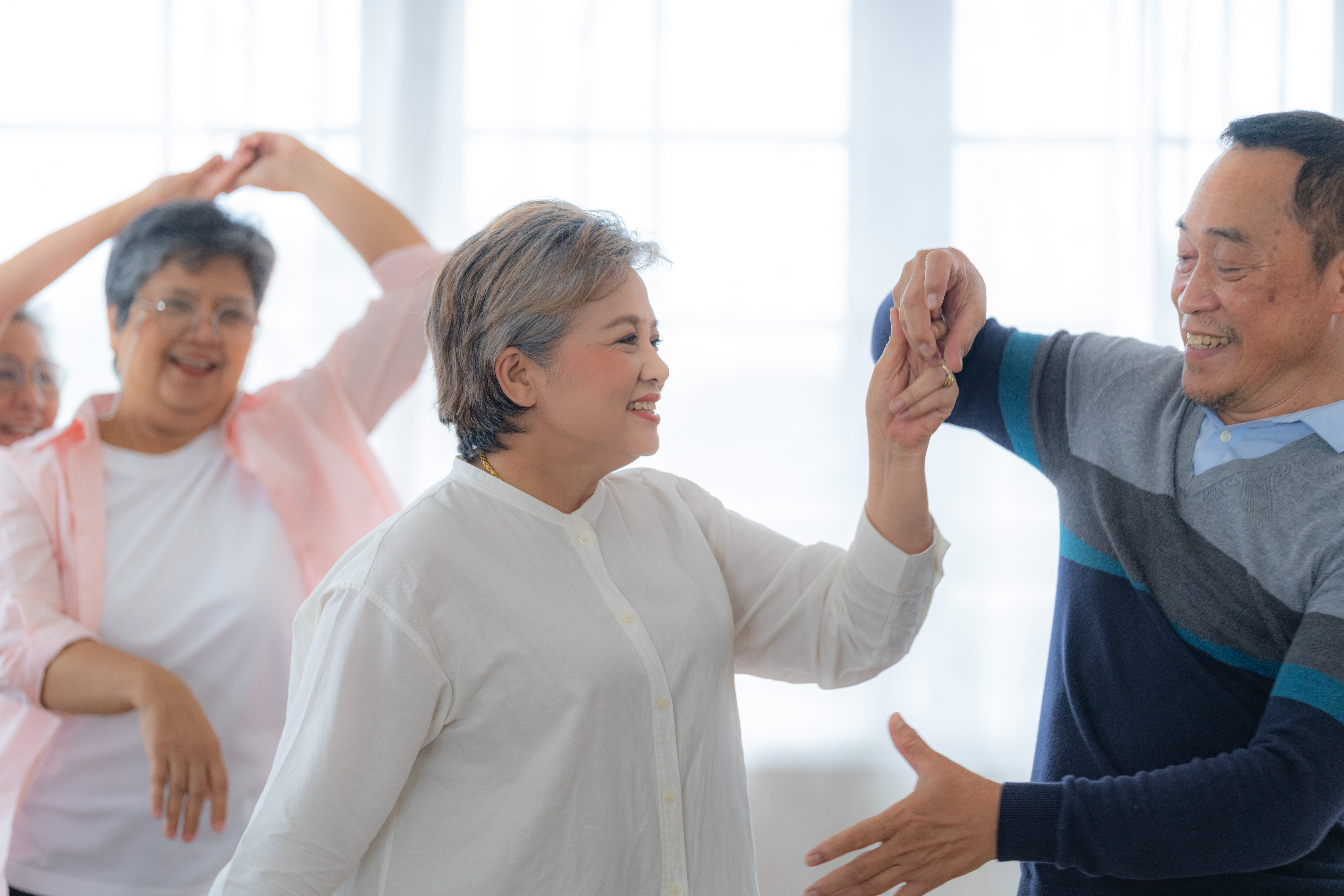
Dance Classes Are Built for Adults Who Haven’t Danced Before
Beginner ballroom dance classes are designed for people who are learning from the beginning. Instructors introduce the steps gradually, giving you time to understand the movement and get comfortable with the rhythm before adding more.
You also don’t need to arrive knowing how to move like a dancer. Early lessons focus on fundamentals such as timing, footwork, balance, and moving with a partner. You’re learning how the pieces fit together one step at a time.
Many ballroom dances use controlled, intentional movement rather than jumping or sudden bursts of speed. Waltz and foxtrot, for example, emphasize smooth movement across the floor. More energetic dances, such as swing or cha cha, bring a different pace and style of movement.
If you need a break or have concerns about a particular movement, talk with your instructor. They can help you understand what the lesson involves and discuss ways to approach the material based on your comfort level.
You Get More Comfortable With the Movement as You Learn
You don’t need to arrive at your first lesson prepared to dance an entire routine. Learning happens gradually as you practice individual steps, patterns, and movements.
At first, even unfamiliar footwork can require more concentration than you expect. With practice, movements that once required your full attention can begin to feel more familiar. That progression is part of learning to dance.
Ballroom dancing also gets you moving. Different dances and lesson formats involve different levels of physical activity, and the experience will vary based on factors such as the style, tempo, duration, and individual dancer.
Dance can engage your legs, core, posture, balance, and coordination as you learn to control your movement and respond to a partner. You don’t have to master all of that at once. Those skills develop through instruction and practice.
Older Adults and People With Different Physical Abilities Can Learn to Dance
Adults begin dance lessons at many different ages and with different levels of previous activity and dance experience. Being older or new to regular physical activity doesn’t automatically mean dance lessons aren’t an option.
If you have limited mobility, joint concerns, balance concerns, or another physical limitation, let your instructor know before you begin. That conversation can help your instructor understand what you’re comfortable doing and determine how the lesson can be approached.
If you have a medical condition, injury, or concerns about whether dance is appropriate for you, talk with a qualified healthcare professional before beginning a new physical activity.
Group classes bring together people with different backgrounds and experience levels, while private lessons provide an opportunity for more individualized instruction. Which format feels right may depend on how you prefer to learn and what you want from your lessons.
You Can Choose How Far You Want to Take Your Dancing
Learning ballroom dance doesn’t have to mean working toward increasingly complicated routines or competitive dancing.
You might want to learn enough to feel comfortable at social events. You might be preparing for a wedding dance. Or you might discover that you enjoy dancing and want to continue learning new styles and patterns.
Those goals can lead to very different experiences, and that’s part of what makes dance adaptable. You can talk with your instructor about what you want to accomplish and shape your lessons around those goals.
There isn’t one finish line every student needs to reach. Your lessons can focus on the kind of dancing you actually want to do.
Feeling Nervous About Starting Is Normal
Fitness isn’t the only reason someone might hesitate before trying a dance class. Walking into any new activity can bring questions: Will I know what I’m doing? Will everyone else have more experience? What happens if I make a mistake?
A beginner class is a place to learn. You’re not expected to arrive knowing the steps or understanding how every dance works. Making mistakes, asking questions, and repeating movements are all part of the process.
An instructor can demonstrate the steps, help you work through unfamiliar movements, and give you time to practice. As the material becomes more familiar, you can focus less on remembering what comes next and more on actually dancing.
Getting comfortable may take time, and that’s OK. You don’t need to look experienced on your first day. That’s what the lessons are for.
What Your First Lesson May Look Like
Your first dance lesson is an introduction to the experience. Rather than expecting you to know a complete routine, an instructor can introduce foundational movements and give you opportunities to practice them.
You may spend time learning basic timing, trying individual steps, and getting a feel for moving to the music. If you’re dancing with a partner, you’ll also begin learning how the two of you move together.
If you start with a private lesson at a New Jersey studio, you’ll have an opportunity to talk with your instructor about your goals, previous experience, and any concerns you want them to know about. In a beginner group class, the instruction is designed around people who are learning the material.
You don’t need to judge your first lesson by how many steps you remember when it’s over. It’s your introduction to something new, and there’s plenty of time to keep building from there.
If you’ve been putting off dance lessons because you’re worried about your fitness level or lack of experience, you don’t need to become a dancer before taking a dance class. At Arthur Murray Dance Studio, beginner lessons are designed to introduce adults to ballroom dancing from the fundamentals.
If you’re in Chatham, Denville, Morristown, or Ridgewood and you’re curious about getting started, reach out about your first lesson and find out what learning to dance could look like for you.
FREQUENTLY ASKED QUESTIONS
Do you need to be fit to take ballroom dance lessons?
No, you don’t need to be fit to start ballroom dance lessons. Beginner classes are designed for adults at any fitness level, and instructors adjust movements and pacing to match your current ability. You build stamina and strength gradually through the lessons themselves.
Is ballroom dancing hard if you’re out of shape?
Ballroom dancing for beginners is not physically demanding in the way high-intensity workouts are. The movements are controlled and low-impact, and instructors teach at a comfortable pace. Most adults find they can participate fully even if they haven’t exercised regularly.
Can seniors take dance lessons?
Yes, many dance studios have students in their 60s, 70s, and beyond. Instructors are experienced in working with varying levels of mobility, balance, and endurance, and they modify steps as needed to accommodate physical limitations or concerns.
How physically demanding are beginner dance classes?
Beginner dance classes involve moderate, sustained movement rather than intense bursts of activity. You’ll be on your feet and moving, but the pace is manageable and includes breaks for instruction and practice. Most students build endurance naturally over the first few weeks.
What if I need to take breaks during a dance lesson?
Taking breaks during a lesson is completely normal and expected. Instructors understand that everyone has different stamina levels, and they’ll work with you at a pace that feels comfortable. You’re never pressured to keep going if you need a moment to rest.
Leave a Reply