
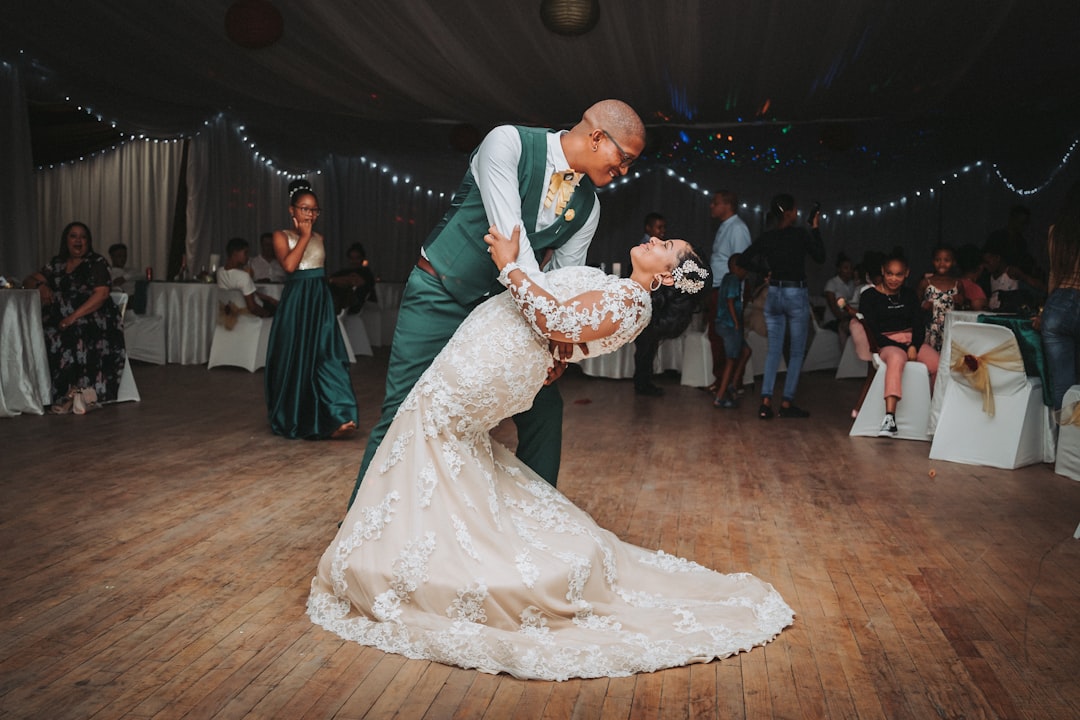
The Song Comes First, Then the Dance
Many couples start wedding dance lessons with a style in mind, then try to make their song fit. But your song already has a tempo, rhythm, and mood that can help point you toward a dance that feels natural.
A slow, romantic song might lend itself to foxtrot or another smooth style. A song with a clear three-count rhythm may be a good fit for waltz. Something upbeat with a strong pulse could open the door to swing. The best choice depends on the music itself, along with how you want your first dance to feel.
Tempo matters, but it isn’t the only consideration. Rhythm, phrasing, and the overall character of the song also influence which dance styles work well. When the movement complements the music, the dance can feel more natural from your first lesson through the wedding day.
Foxtrot Works With Many Contemporary Wedding Songs
Foxtrot is a popular option for wedding first dances because its smooth movement can work well with a variety of songs. It also gives couples room to keep things simple or add more movement as they become comfortable.
The basic rhythm can provide enough structure to help new dancers feel grounded without requiring an elaborate routine. Depending on the song and the style of foxtrot being taught, an instructor can adapt the movement to fit the music and the couple.
Foxtrot also works across different experience levels. Beginners can focus on fundamental timing and movement, while couples who want a more involved routine can incorporate turns, traveling steps, or other elements that fit their abilities and the music.
If you’ve never taken wedding dance lessons before, you don’t need to know whether your song is a foxtrot before you arrive. An instructor can listen to your music and show you which styles could work.
Waltz Works With a Three-Count Rhythm
Waltz is built around music with three beats per measure, giving the dance its recognizable flowing quality. If your wedding song has a clear one-two-three pulse, waltz may be worth exploring.
The style can create a romantic, sweeping first dance, particularly for couples who enjoy its continuous movement. The music matters, though. A song that sounds slow and romantic isn’t necessarily a waltz, so the underlying rhythm is more important than the mood alone.
Waltz also has its own timing, technique, and movement patterns to learn. How quickly those elements feel comfortable will vary from couple to couple. An instructor can adjust the choreography based on your experience, comfort level, and the amount of time you have before the wedding.
You don’t need to rule waltz in or out based on your dance experience. The better question is whether the music supports it and whether you enjoy the way the style feels together.
Swing Brings More Energy to a First Dance
For couples using an upbeat song, swing can bring a playful, energetic feel to the first dance. Its lively rhythms and variety of movements create a different atmosphere from smoother styles such as foxtrot or waltz.
Swing encompasses several styles, so the specific movement and timing will depend on the music. An instructor can determine which approach works with your song and adapt the choreography to your experience and comfort level.
The energy of swing can also shape the mood of the moment. Some couples want a quiet, romantic first dance. Others want something that gets their guests smiling and ready to join them on the dance floor.
Neither approach is better. The goal is to choose movement that suits the music and feels like the two of you rather than picking a style simply because it looks impressive.
How Song Tempo Helps Determine Which Dance Fits
Tempo can help narrow down the possibilities, but BPM alone doesn’t determine the right dance.
Two songs can have similar tempos while using completely different rhythms. A song with a three-count feel may support waltz, while another song at a similar speed could call for an entirely different style. Depending on how the music is counted or interpreted, instructors may also hear more than one possibility in the same song.
If you’re curious about your song’s tempo, you can count the beats or use a BPM tool as a starting point. Then listen for the underlying rhythm and accents in the music. Those details help determine how the dance should move.
Some songs fit neatly into a recognizable dance style. Others are less obvious and can support more than one approach. That’s one reason it can be helpful to bring your actual wedding song to a lesson rather than choosing a dance style based on tempo alone.
What to Expect When You Start Wedding Dance Lessons in New Jersey
How far in advance you begin wedding dance lessons depends on the kind of first dance you want, your schedules, your previous dance experience, and how much time you’d like to spend practicing.
Starting earlier can give you more time to get comfortable with the movement and build your routine gradually. Starting closer to the wedding doesn’t mean you’ve missed your chance. Your instructor can tailor the dance to the time available and focus on what will help you feel prepared for the reception.
Early lessons generally focus on fundamentals such as rhythm, footwork, and moving comfortably together. More involved elements can be introduced as you progress and depending on what you want your first dance to include.
If you’re wondering how the process begins, learn more about what to expect from your first dance lesson.
Private lessons allow the instruction and choreography to be tailored to your song and goals. Other opportunities to dance can also give you more experience moving together and becoming comfortable using what you’ve learned.
When You’re Not Sure Which Dance Fits Your Song
Some songs don’t fall neatly into one category. The tempo might work with more than one dance, the rhythm may be difficult to identify at first, or the song may change in ways that make a less traditional approach a better fit.
You don’t need to decide on a dance style before your first lesson. Bring your song and let your instructor listen to it with you. From there, you can explore styles that work with the music while also considering your experience, comfort level, wedding timeline, and the kind of first dance you want.
If you’re deciding between two songs, think about which one means more to you as a couple. An instructor can help figure out the movement from there.
Your first dance doesn’t need to be complicated to feel special. It needs to fit the music, feel comfortable enough that you can enjoy it, and give you a moment together in the middle of a busy wedding day.
If you’re planning a wedding in Chatham, Denville, Morristown, or Ridgewood, Arthur Murray Dance Studio in Chatham, NJ offers private wedding dance lessons built around your song, experience, and goals. Bring your music, and your instructor can help you find a style and approach that feels natural for the two of you.
Reach out to book your first lesson and bring your song with you.
FREQUENTLY ASKED QUESTIONS
Which ballroom dance is best for a wedding first dance?
Foxtrot is the most common choice because it fits the tempo and mood of most contemporary wedding songs. It’s also easier to learn than waltz and more adaptable for beginners.
How do you match a dance style to your wedding song?
Start with the song’s tempo. Count the beats per minute or use an online BPM tool. Foxtrot works for 120-135 BPM, waltz for 84-96 BPM, and swing for 136-160 BPM. The rhythm and mood of the song will confirm which style feels right.
What’s the difference between foxtrot and waltz for weddings?
Foxtrot has a smooth, even four-count rhythm and works for most popular love songs. Waltz has a three-count rhythm with a rise-and-fall motion that feels more formal and requires more precise footwork.
Is swing dancing appropriate for a wedding?
Swing works well for upbeat, high-energy songs and couples who want a fun, celebratory first dance. It requires more coordination than foxtrot or waltz and fits a less formal tone.
How far in advance should you start wedding dance lessons?
Three to six months before the wedding gives you enough time to learn a full routine without feeling rushed. If you’re starting closer to the date, instructors can simplify the choreography to fit your timeline.
Leave a Reply