
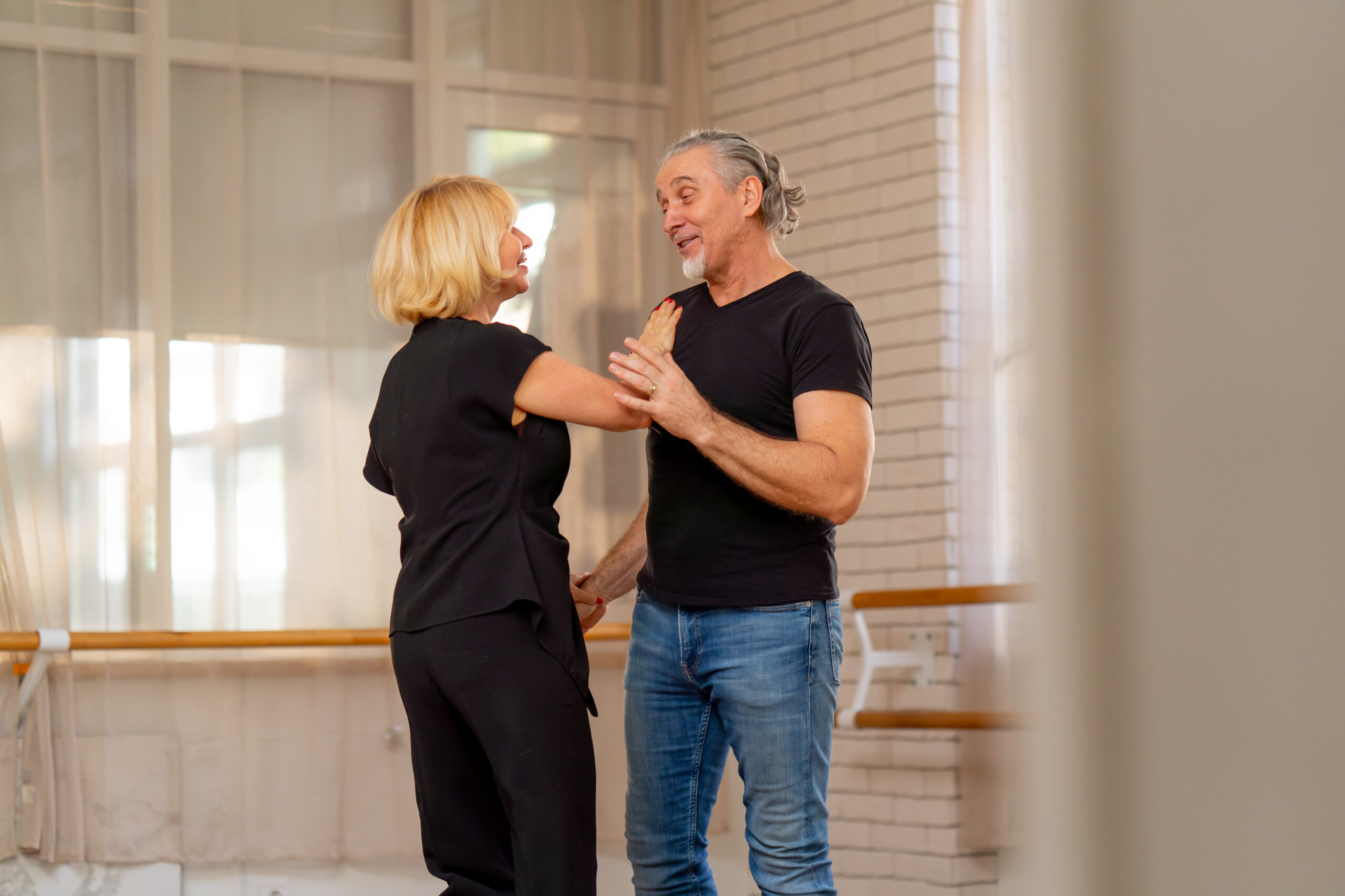
Wear comfortable clothing that lets you move freely—fitted enough that an instructor can see your posture, loose enough that you won’t feel restricted. Clean, non-marking shoes with a smooth sole work best. You don’t need anything special for your first lesson.
Most people spend more time deciding what to wear to ballroom dance lessons than they spend thinking about anything else that week. Not because it matters that much, but because it gives them something concrete to worry about instead of the larger question of whether they’ll look like they know what they’re doing.
The short version: you probably already own what you need.
What Works Best for Your First Lesson
For clothing, think about what you’d wear to a casual workout—something that won’t ride up, fall down, or make you overly aware of your body while you’re trying to focus on your feet. Fitted jeans or dress pants work. So do leggings, khakis, or a skirt that hits at or below the knee. A simple top that stays put when you lift your arms is all you need on top.
You want an instructor to be able to see your shoulders, hips, and knees—not because anyone’s judging how you look, but because alignment matters in partner dancing and they can’t help you adjust what they can’t see.
Shoes are the only piece that deserves real thought. You’ll be pivoting, stepping backward, and shifting your weight in ways you don’t normally move. Anything with a sticky rubber sole will catch on the floor. Heels that are too high or too flat both make balance harder than it needs to be. A smooth leather sole—or something close to it—gives you the right amount of glide.
Shoes That Make Learning Easier
Women often show up in flats, low heels, or character shoes if they’ve danced before. A one- to two-inch heel helps with posture and makes it easier to stay on the ball of your foot, but it’s not required. What matters more is that the sole is smooth and the shoe is secure. No flip-flops, no sneakers, no boots with tread.
Men typically do well in leather-soled dress shoes or jazz shoes. If you don’t own either, a pair of loafers or Oxfords with a harder sole will get you through a first lesson without issue. The goal is to be able to turn without your foot sticking to the floor mid-step.
If the sole has too much grip, you’ll feel resistance every time you try to pivot. Your foot will stop moving before your body does, which throws off your balance and makes every step feel more awkward than it should. A smooth sole lets you rotate cleanly, which is half of what makes dancing feel natural instead of mechanical.
If you’re not sure what you have at home will work, wear them anyway and ask when you arrive. Most studios keep a small stock of loaners or can point you toward an inexpensive pair that will last you through your first few months. You can always upgrade later if dance becomes part of your routine.
What You Don’t Need to Buy
You don’t need dance-specific clothing. No special skirts, no performance tops, no expensive shoes before you’ve taken a single lesson. Some beginners assume they’ll look out of place without them, but most people in a beginner class are dressed the way you’d expect—normal clothes, nothing flashy, nothing that required a separate shopping trip.
You also don’t need to match your partner if you’re coming with someone. Coordination doesn’t make you dance better, and no one in the room will notice either way.
What to Avoid
Anything restrictive across the shoulders or hips will make it harder to move the way the steps require. Tight dress shirts that pull when you lift your arms, pencil skirts that don’t have any give, or stiff denim that doesn’t bend easily will all work against you.
Baggy clothing has the opposite problem. If your shirt is too loose, your instructor won’t be able to see whether your frame is where it should be. If your pants are too long, you’ll step on the hem.
Jewelry that swings or catches—long necklaces, dangling bracelets—tends to get in the way when you’re learning hand positions. You won’t ruin the lesson by wearing them, but you’ll probably take them off halfway through.
Shoes with thick or chunky soles make it harder to feel the floor beneath you, which matters more than most people expect. Dancing involves a lot of weight transfer and subtle shifts in balance, and the feedback you get through a thin sole helps you understand what your feet are doing. Thick-soled shoes create a disconnect between what you’re trying to do and what you can actually feel, which makes every movement less intuitive.
What People Actually Wear
Most men show up in a collared shirt or a fitted t-shirt and dress pants or dark jeans. Most women wear a blouse or a simple top with pants, leggings, or a knee-length skirt. The range is wider than people expect, and no one’s dressed identically.
The people who’ve been dancing awhile sometimes wear more fitted or formal clothing, not because it’s required but because they’ve figured out what makes movement feel easier. You’ll get there if you keep going, but there’s no reason to dress like them on day one.
What Actually Matters
How you’re dressed affects how you feel walking in, and that’s not nothing. If you’re comfortable and you can move, the rest takes care of itself. Your instructor isn’t evaluating your outfit—they’re watching your feet, your posture, and how you respond to correction.
The people who have the easiest time in their first lesson aren’t the ones who researched the dress code for an hour. They’re the ones who showed up in something comfortable and forgot about it five minutes in.
If you’re near Chatham, Denville, Morristown, or Ridgewood and you’ve been putting off that first lesson because you weren’t sure what to wear, this is your confirmation that you’re overthinking it. Arthur Murray’s instructors have seen every version of “I wasn’t sure what to bring” and no one’s ever been turned away for wearing the wrong thing.
Leave a Reply