
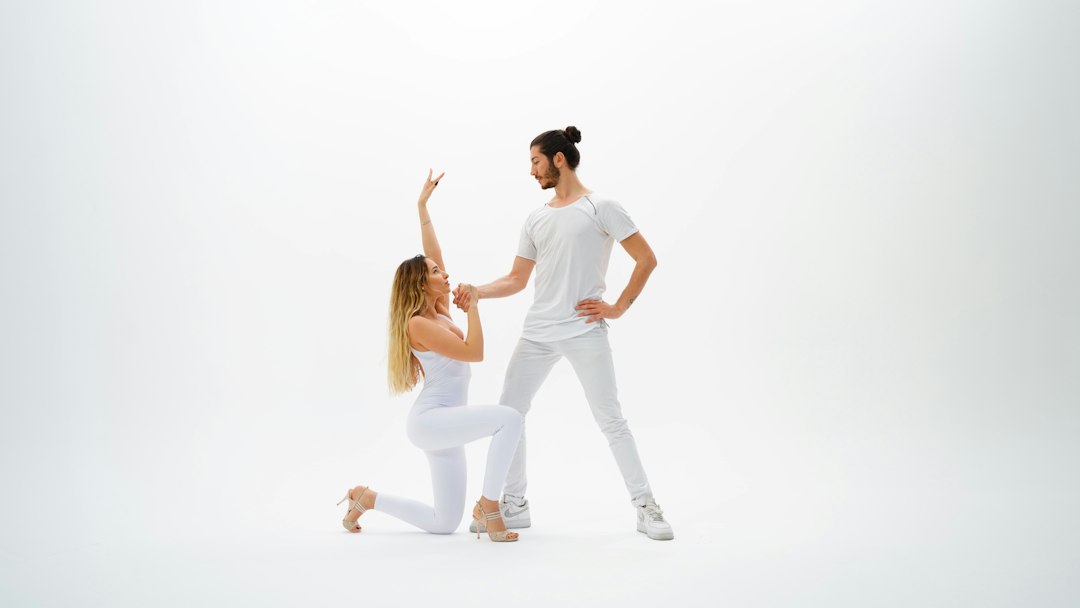
You leave a dance lesson feeling like the steps finally make sense. Then a few days pass, and suddenly you’re trying to remember which foot moved first.
That’s a normal part of learning something new. You’re taking movements that require a lot of thought at first and gradually making them more familiar through repetition.
Practicing between lessons can help keep what you’ve learned fresh, and it doesn’t have to mean running through an entire routine at home. A little focused practice can give you something familiar to build on when you return for your next lesson.
Start With the Basic Pattern
When you leave a lesson, you may be thinking about footwork, timing, posture, leading or following, and everything else you worked on. Trying to practice all of it at once can make things unnecessarily complicated.
Instead, choose one basic pattern or element to revisit.
If you’re learning foxtrot, that might mean walking through the basic timing. If you’re learning waltz, you might practice counting the rhythm while moving through a familiar pattern. If there’s one transition that gave you trouble, slow it down and work through the parts you remember.
The goal isn’t to recreate your entire lesson. It’s to reinforce something you already learned so it feels more familiar the next time you encounter it.
Listen to the Music
Practicing dance doesn’t always require dancing.
Listening to music in the style you’re learning gives you another opportunity to become familiar with its rhythm and timing. Try finding the beat, counting along, or simply noticing how the music feels compared with other dance styles.
If you’re learning swing, for example, spend some time listening to music that fits the style and identifying the rhythm. If you’re preparing to dance to a particular song for an event, listening to that song regularly can help you become more familiar with its changes and phrasing.
You can do this while driving, cooking, or going about your day. You don’t need space to move to spend a little more time with the music.
Practice the Details Without Trying to Do Everything
Sometimes the most useful practice has very little to do with covering a lot of floor.
If your instructor has been working with you on posture, how you carry your frame, or where you place your weight, you can focus on those elements individually. Practicing one detail at a time lets you focus on it without trying to remember every step at once.
A mirror can be useful here. It can help you notice things that are difficult to feel while you’re moving, such as where you’re looking or how you’re holding your upper body.
If you decide to record yourself, keep the same principle in mind. You don’t need to film an entire routine. A short recording of a familiar pattern may be enough to help you see something your instructor has previously pointed out.
The goal isn’t to critique every part of your dancing. Focus on the specific things you’re already learning rather than trying to teach yourself something new.
Use the Space You Have
You don’t need a dance floor at home to practice.
Some movements can be practiced almost in place, while others may only require enough room for a few steps. If you’re working on timing, posture, or a basic pattern, a small open area may be all you need.
For movements that travel, you can shorten the pattern or focus on a portion of it rather than trying to cover the same amount of floor as during a lesson.
Just make sure the space is safe for movement. Clear anything you could trip over, and avoid practicing on a surface that makes it difficult to move comfortably.
The point is repetition, not recreating the studio in your living room.
Keep Practice Manageable
You don’t need to turn practice into another major commitment on your calendar.
A few minutes spent revisiting something you learned can be easier to fit into your week than waiting until you have enough time for a long practice session. You might walk through a pattern while dinner is cooking, count a rhythm when you hear a familiar song, or spend a few minutes reviewing something you found challenging during your last lesson.
Keeping practice manageable also makes it easier to focus. Rather than running through everything you know, choose one or two things you want to remember.
And if you’re unsure about a step, you don’t have to practice your best guess until it becomes a habit. Make a note of what feels unclear and ask about it when you return to your instructor.
Give Yourself Something to Build On
The purpose of practicing between lessons isn’t to perfect your dancing on your own. Lessons give you instruction and feedback; practice gives you a chance to become more familiar with what you’ve already learned.
That might mean remembering a basic pattern more easily, recognizing a song’s rhythm sooner, or feeling less preoccupied with your feet. Progress doesn’t have to mean adding more steps every week.
The more familiar the fundamentals become, the more attention you can give to the next part of your dancing.
If you’re in the Chatham area and interested in learning ballroom dance, learn more about dance lessons at Arthur Murray Chatham. Whether you’re completely new to dancing or returning to it after time away, getting started gives you something new to learn, practice, and enjoy.
Leave a Reply