
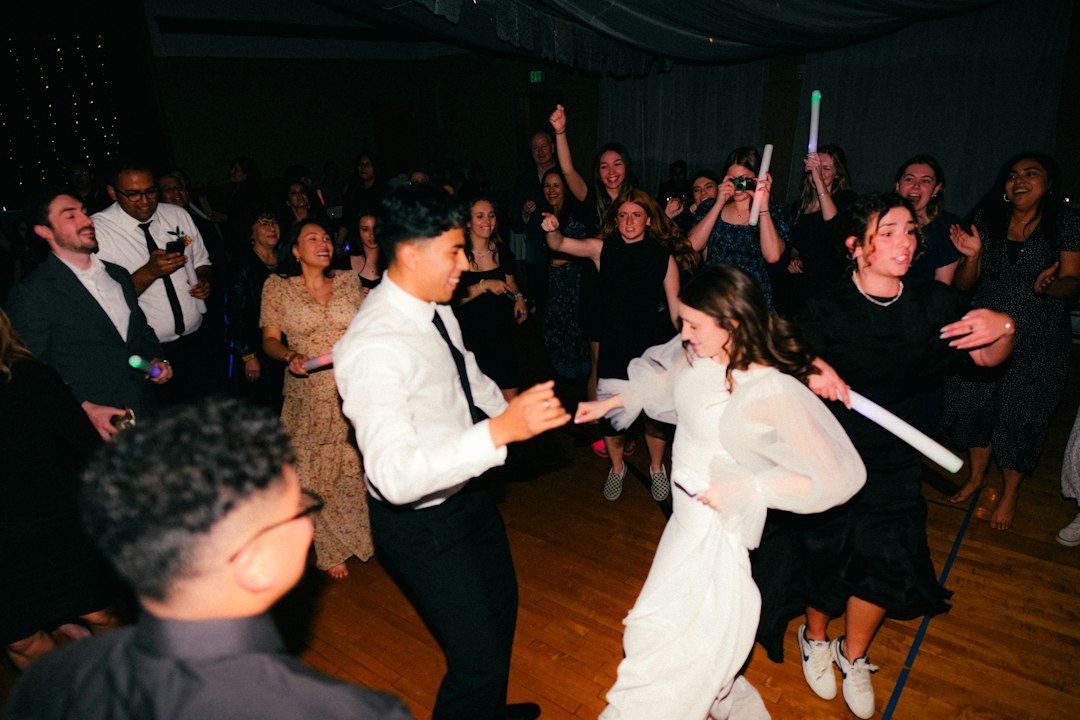
A wedding invitation usually comes with a short list of things to figure out, like what to wear, what to give, and how to get there. For a lot of guests, there’s also a quieter question about the reception. At some point the music will start, someone will wave you onto the dance floor, and you’ll want to feel like you belong there.
Nobody expects wedding guests to be trained dancers. Even so, a handful of partner dances come up at receptions again and again, and knowing the basics of each can change how the whole night feels. Here are the dances to know as a wedding guest, along with how much preparation makes sense.
What the Dance Floor at a Wedding Is Really Like
For most of the reception, guests are dancing freestyle. When upbeat pop, rock, or current hits play, people move in whatever way feels natural, and no one is checking anyone’s footwork. DJs and bands tend to rotate between fast songs that fill the floor with groups and slower songs that bring out couples.
The moments that catch people off guard are the partner dances. When a slow song or a swing number starts and someone asks you to dance, knowing how to hold a partner and move with them makes the moment far easier. Feeling comfortable enough to say yes is all the moment asks of you.
The Dances to Know as a Wedding Guest
Slow dancing: Slow songs show up at nearly every reception, often during dedications, anniversary dances, or moments meant to bring everyone onto the floor. A basic foxtrot works for most of them. You hold your partner in a closed position and move through a simple walking or box pattern in time with the music. The steps are simple, but it helps to know where your hands go and how to lead or follow without stepping on each other.
Swing: Swing comes up at weddings more than people expect. Big band standards, retro hits, and plenty of pop songs have a swing rhythm, and the floor often fills with guests who know what to do with it. A basic swing step lets you join in instead of watching. For a closer look at how these styles compare, here’s how to choose between foxtrot, waltz, and swing for a wedding.
Cha cha and rumba: These appear less often, mostly at weddings with live bands or DJs who play Latin and classic dance music. Each has a distinct rhythm that’s hard to improvise, so they’re worth learning if you expect that kind of playlist.
Line dances: The Cupid Shuffle, the Electric Slide, and similar group numbers need no preparation. Most guests pick them up on the floor by following along, so you can jump in or sit them out.
What Changes When You Know the Basics
Knowing how to get through a slow song changes how a reception feels. When the music shifts and people pair up, you no longer have to choose between leaving the floor and standing there hoping the song ends soon. If a relative, a friend, or 1 of the newlyweds asks you to dance, you can say yes without a second thought.
It also takes away the low-level stress of anticipating moments you don’t feel ready for. You stop scanning the room to see who might ask you and start enjoying the party. For more ways to feel ready, read about preparing for social events where dancing is part of the fun.
How Much Preparation Do You Need?
Getting ready for a wedding doesn’t take months. A few lessons focused on slow dancing, a basic swing step, and how to hold your frame can cover most of the partner moments you’ll run into. That’s often enough to understand leading and following and to recognize which dance fits which song.
Arthur Murray personalizes lessons to your goals, so you can ask for a crash course built around the dances you expect at the reception. If you’re in the wedding party, or the event is one where dancing is a bigger part of the night, a little more preparation may make sense.
Timing helps, too. Starting a few weeks before the wedding gives you time to absorb the basics and practice between lessons, so you aren’t trying to recall instructions on the dance floor. Lessons the week of the event can still give you a rough idea of what to do, but the steps feel more natural when they’ve had time to settle.
When You Might Not Need Lessons
Not every wedding calls for preparation. If dancing is secondary to dinner, speeches, and catching up, or if you’re comfortable improvising, freestyle dancing and sitting out a few songs will serve you fine. Guests attending solo who don’t plan to partner dance can participate as much or as little as they like. If you’re going solo and would still like to be ready when someone asks, Arthur Murray’s singles dance lessons don’t require a partner or any experience.
If you’ve ever stood at the edge of a dance floor wishing you knew what everyone else was doing, or turned down a dance to avoid embarrassment, learning the basics is worth it. A little preparation lets you spend the night enjoying something you’d like to do instead of avoiding it.
Feel Ready for the Dance Floor Before the Wedding
Arthur Murray Dance Studios in northern New Jersey teach the partner dances that come up most at weddings and other social events, including slow dancing and swing. The $49 trial class is an easy first step toward walking into the reception ready for whatever the band or DJ plays.
Leave a Reply